
AV Vocabulary
DQN — (ドキュン) — “Bad boy look”
[…]
Originally, in Japan, these groups of delinquents, troublesome students, and “hot-headed youths” were called “yanki” (ヤンキー) from the 1960s onward. The term originated from the way people from the Northern United States were referred to during the American Civil War. It came to be used for groups of young men and women who liked to style their hair in certain ways and wear fashionable clothing influenced by the United States. It is said that the term arose because of G.I. soldiers, or American infantrymen, who introduced these fashions to the Japanese, especially the clothing fashions of the rock-and-roll era.
Part of this style has remained to the present day, whether through the use of leather shirts, jackets, blond hair, permed curly hair, heavily pomaded hair, or the regent hairstyle.
However, in recent times, the Japanese began calling this group of people by a new term: DQN. It is by no means an abbreviation of Dragon Quest or Deep Network. It can be said to be a slang term particularly specific to Japan.
From the late 1990s onward, these groups of delinquents began to be referred to by the media as DQN, an abbreviation of Dokyun (ドキュン), a term used to refer to men and women of bad character, delinquents, and, even in a derogatory sense, stupid and useless people.
The word Dokyun first became popular through a television program called “Mokugeki Dokyun” (目撃ドキュン), which reported on these people, interviewed those who had been victims, and recorded the behavior of these delinquents as they threatened and extorted money from ordinary people.
The program, however, tended to portray these people differently from the image of the yanki, who still possessed a certain image of being cool, rebellious, and opposed to the system. Instead, it emphasized that these youths were a social problem in Japan: they frequently caused trouble, had personal problems, did not follow rules, and lacked common sense and social awareness.
Later, this term was eventually turned into an abbreviation used on the internet: DQN. In the end, it came to be used not only for delinquents, but also for ill-mannered and unruly youths who behaved repulsively, such as wearing their school uniforms and styling their hair against school regulations, wearing extremely baggy pants, carrying their school bags as if they were backpacks, or wearing headphones while playing metal music at a high volume and disturbing other people.
In Japanese AV films, originally, due to the popularity of certain genres in the past, especially the rape genre, groups of delinquents were a perfect combination for creating uncomfortable situations: beautiful women had to be molested by these individuals with no background or education, who intimidated or deceived them. However, there was still no specific designation to clearly identify these people.
But, just as happened with the NTR genre, as the AV film industry adapted to society, it also began using terminology to sell its products to “netizens”, who had become a large segment of Japanese society.
Looking back at the history, we can see that in 2016, the term DQN began to be used for promotional purposes on covers or prominently incorporated into film titles by practically every production company, almost simultaneously and without any prior coordination among them.
The plots of films featuring DQN groups are not difficult to predict. However, one thing worth noting is that these films began presenting stories that were more elaborate than those of older AV films. It was not simply a matter of having men with these kinds of appearances perform alongside the female actresses. They were often incorporated into NTR films, or into stories involving wives or lovers who have relationships with other people, either willingly or unwillingly.
The most popular DQN plot is that of a teenage girl who is perfect in every way: beautiful, a good student, and with a promising future. However, one day, she accidentally encounters the group of delinquents at her school. Whether because she was bullied by other girls or because of some kind of cruel fate, the girl ends up being molested by this group of delinquents.
But because she is naïve and inexperienced with the world, she eventually comes to enjoy and become infatuated with the sexual experience, until she completely abandons her future and her boyfriend. She begins living together with these criminals, completely degraded.
Several production companies produced series based on this type of story, such as Moodyz and S1, which adapted this type of plot in various other ways.
Although the AV film industry has adapted to new slang terms, the view of DQN plots remains the same, because the audience consists of men. The creation of fantasy plots for the majority of people in society who are not winners in the real world serves to satisfy desires that some viewers enjoy, mixed with a sense of frustration.
The delinquents generally get their desires fulfilled through extremely degrading behavior, without having to “be sad all the time.”
Although there have been some changes in appearance — DQN no longer necessarily have to dress like yanki — they may be influenced by hip-hop culture, wear jackets, add large chains, oversized rings, and sunglasses.
But what remains unchanged is the search for AV actresses with an aggressive personality and appearance, an intimidating face, a face full of marks or imperfections, a strong or very heavy body, whose appearance immediately makes it clear, just by looking at them, that they have the “bad boy look.”
Source: Hitomitokushada, Wiki
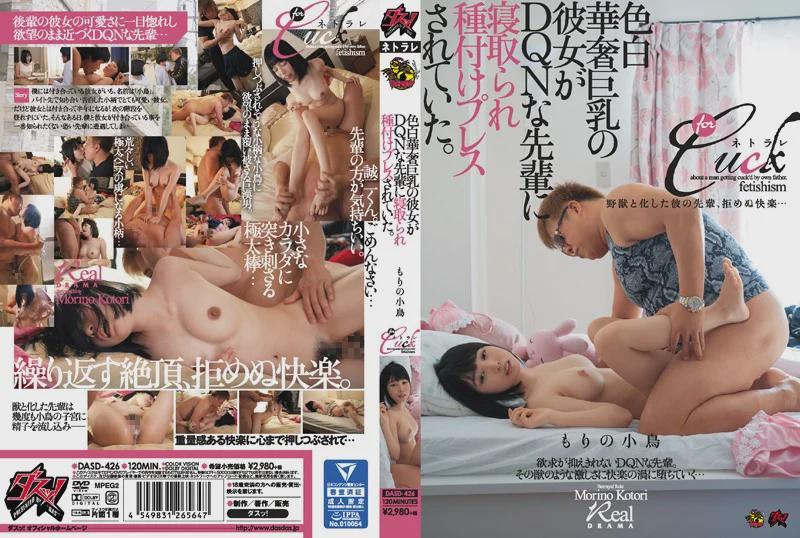
CODE: DASD-426


